June 28s BetFair millionaire story (about Elliott Short) in the News Of The World was total bullshit.

No Gravatar

June 28&#8217-s BetFair millionaire story (about Elliott Short) in the News Of The World was complete bullshit.

BetFair:

Recent &#8216-News of the World&#8217- Article

Betfair Customer Services 29 Jun 13:13

We have been contacted by several customers in relation to an article in Sunday’s News of the World. We would like to make it clear that Betfair was not asked to comment on, or validate any aspect of, the article ahead of publication.

Although we cannot comment on the activities of any specific customer, some facts which may be relevant to some of the claims made in the article include:

The biggest winner in the relevant Britain’s Got Talent market (Susan Boyle winner &#8211- Yes/No) won less than ?3,000.

No Betfair customer won ?1.5 million or anything even vaguely approaching that amount betting on the Champion Hurdle.

No Betfair customer won ?500,000 or anything even vaguely approaching that amount laying Monsieur Chevalier at Royal Ascot.

The figures shown in the account statement screenshot in the News Of the World do not reconcile to any Betfair account.

The monies present in a Betfair account are obviously no indicator of the sums won or lost on the account.

We would encourage customers to be wary of the claims of anyone purporting to have a profitable system or strategy.

We would encourage customers to retain a healthy degree of scepticism toward any claims made in the press which are not validated by Betfair.

Robin Hanson: My best idea was prediction markets.

Robin Hanson&#8216-s auto-biography (i.e., how Our Master Of All Universes views HimSelf):

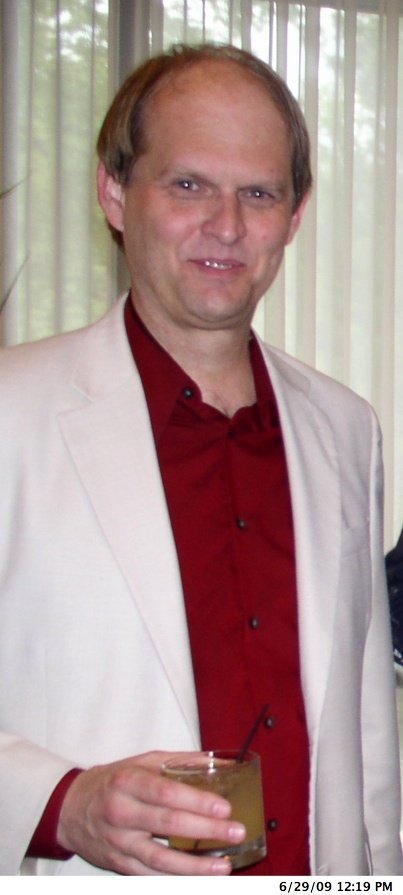
robin-hanson-drink

Robin Hanson:

Do you find it hard to summarize yourself in a few words? Me too.

But I love the above quote. I have a passion, a sacred quest, to understand everything, and to save the world. I am addicted to a€?viewquakesa€?, insights which dramatically change my world view. I loved science fiction as a child, and have studied physics, philosophy, artificial intelligence, economics, and political science a€” all fields full of such insights. Unfortunately, this also tempted me to leave subjects after mastering their major insights.

I also have a rather critical style. I beat hard on new ideas, seek out critics, and then pledge my allegiance only to those still left standing. In conversation, I prefer to identify a claim at issue, and then focus on analyzing it, rather than the usual quick tours past hundreds of issues. I have always asked questions, even when I was very young.

I have little patience with those whose thinking is sloppy, small, or devoid of abstraction. And Ia€™m not a joiner– I rebel against groups with a€?our beliefsa€?, especially when members must keep criticisms private, so as not to give ammunition to a€?them.a€?A  I love to argue one on one, and common beliefs are not important for friendship a€” instead I value honesty and passion.

In a€?77 I began college (UCI) in engineering, but switched to physics to really understand the equations.A  Two years in, when physics repeated the same concepts with more math,A  I studied physics on my own, skipping the homework but acing the exams.A  To dig deeper, I did philosophy of science grad school (U Chicago), switched back to physics, and was then seduced to Silicon Valley.

By day I did artificial intelligence (Lockheed, NASA), and by night I studied on my own (Stanford) and hung with Xanadua€™s libertarian web pioneers and futurists.A  I had a hobby of institution designmy best idea was idea futures, now know as prediction markets. Feeling stuck without contacts and credentials, I went for a Ph.D. in social science (Caltech).

The physicist in me respected only econ experiments at first, but I was soon persuaded econ theory was full of insight, and did a theory thesis, and a bit of futurism on the side.A  I landed a health policy postdoc, where I was shocked to learn of medicinea€™s impotency.A  I finally landed a tenure-track job (GMU), and also found the wide-ranging intellectual conversations Ia€™d lacked since Xanadu.

My Policy Analysis Market project hit the press shit fan in a€?03, burying me in media attention for a while, and helping to kickstart the prediction market industry, which continues to grow and for which I continue to consult.A  The press flap also tipped me over the tenure edge in a€?05- my colleagues liked my being denounced by Senators. :)Tenure allowed me to maintain my diverse research agenda, and to start blogging at Overcoming Bias in November a€?06, about the same time I became a research associate at Oxforda€™s Future of Humanity Institute.

My more professional bio is here.

Robin Hanson is an associate professor of economics at George Mason University, and a research associate at the Future of Humanity Institute of Oxford University. After receiving his Ph.D. in social science from the California Institute of Technology in 1997, Robin was a Robert Wood Johnson Foundation health policy scholar at the University of California at Berkeley. In 1984, Robin received a masters in physics and a masters in the philosophy of science from the University of Chicago, and afterward spent nine years researching artificial intelligence, Bayesian statistics, and hypertext publishing at Lockheed, NASA, and independently.

Robin has over 70 publications, including articles in Applied Optics, Business Week, CATO Journal, Communications of the ACM, Economics Letters, Econometrica, Economics of Governance, Extropy, Forbes, Foundations of Physics, IEEE Intelligent Systems, Information Systems Frontiers, Innovations, International Joint Conference on Artificial Intelligence, Journal of Economic Behavior and Organization, Journal of Evolution and Technology, Journal of Law Economics and Policy, Journal of Political Philosophy, Journal of Prediction Markets, Journal of Public Economics, Medical Hypotheses, Proceedings of the Royal Society, Public Choice, Social Epistemology, Social Philosophy and Policy, Theory and Decision, and Wired.

Robin has pioneered prediction markets, also known as information markets or idea futures, since 1988. He was the first to write in detail about people creating and subsidizing markets in order to gain better estimates on those topics. Robin was a principal architect of the first internal corporate markets, at Xanadu in 1990, of the first web markets, the Foresight Exchange since 1994, and of DARPA&#8217-s Policy Analysis Market, from 2001 to 2003. Robin has developed new technologies for conditional, combinatorial, and intermediated trading, and has studied insider trading, manipulation, and other foul play. Robin has written and spoken widely on the application of idea futures to business and policy, being mentioned in over one hundred press articles on the subject, and advising many ventures, including Consensus Point, GuessNow, Newsfutures, Particle Financial, Prophet Street, Trilogy Advisors, XPree, YooNew, and undisclosable defense research projects.

Robin has diverse research interests, with papers on spatial product competition, health incentive contracts, group insurance, product bans, evolutionary psychology and bioethics of health care, voter information incentives, incentives to fake expertize, Bayesian classification, agreeing to disagree, self-deception in disagreement, probability elicitation, wiretaps, image reconstruction, the history of science prizes, reversible computation, the origin of life, the survival of humanity, very long term economic growth, growth given machine intelligence, and interstellar colonization.

Robin Hanson: My best idea was prediction markets.

Robin Hanson‘s auto-biography (i.e., how Our Master Of All Universes views HimSelf):

robin-hanson-drink

Robin Hanson:

Do you find it hard to summarize yourself in a few words? Me too.

But I love the above quote. I have a passion, a sacred quest, to understand everything, and to save the world. I am addicted to “viewquakes”, insights which dramatically change my world view. I loved science fiction as a child, and have studied physics, philosophy, artificial intelligence, economics, and political science — all fields full of such insights. Unfortunately, this also tempted me to leave subjects after mastering their major insights.

I also have a rather critical style. I beat hard on new ideas, seek out critics, and then pledge my allegiance only to those still left standing. In conversation, I prefer to identify a claim at issue, and then focus on analyzing it, rather than the usual quick tours past hundreds of issues. I have always asked questions, even when I was very young.

I have little patience with those whose thinking is sloppy, small, or devoid of abstraction. And I’m not a joiner; I rebel against groups with “our beliefs”, especially when members must keep criticisms private, so as not to give ammunition to “them.”  I love to argue one on one, and common beliefs are not important for friendship — instead I value honesty and passion.

In ‘77 I began college (UCI) in engineering, but switched to physics to really understand the equations.  Two years in, when physics repeated the same concepts with more math,  I studied physics on my own, skipping the homework but acing the exams.  To dig deeper, I did philosophy of science grad school (U Chicago), switched back to physics, and was then seduced to Silicon Valley.

By day I did artificial intelligence (Lockheed, NASA), and by night I studied on my own (Stanford) and hung with Xanadu’s libertarian web pioneers and futurists.  I had a hobby of institution design; my best idea was idea futures, now know as prediction markets. Feeling stuck without contacts and credentials, I went for a Ph.D. in social science (Caltech).

The physicist in me respected only econ experiments at first, but I was soon persuaded econ theory was full of insight, and did a theory thesis, and a bit of futurism on the side.  I landed a health policy postdoc, where I was shocked to learn of medicine’s impotency.  I finally landed a tenure-track job (GMU), and also found the wide-ranging intellectual conversations I’d lacked since Xanadu.

My Policy Analysis Market project hit the press shit fan in ‘03, burying me in media attention for a while, and helping to kickstart the prediction market industry, which continues to grow and for which I continue to consult.  The press flap also tipped me over the tenure edge in ‘05; my colleagues liked my being denounced by Senators. :)   Tenure allowed me to maintain my diverse research agenda, and to start blogging at Overcoming Bias in November ‘06, about the same time I became a research associate at Oxford’s Future of Humanity Institute.

My more professional bio is here.

Robin Hanson is an associate professor of economics at George Mason University, and a research associate at the Future of Humanity Institute of Oxford University. After receiving his Ph.D. in social science from the California Institute of Technology in 1997, Robin was a Robert Wood Johnson Foundation health policy scholar at the University of California at Berkeley. In 1984, Robin received a masters in physics and a masters in the philosophy of science from the University of Chicago, and afterward spent nine years researching artificial intelligence, Bayesian statistics, and hypertext publishing at Lockheed, NASA, and independently.

Robin has over 70 publications, including articles in Applied Optics, Business Week, CATO Journal, Communications of the ACM, Economics Letters, Econometrica, Economics of Governance, Extropy, Forbes, Foundations of Physics, IEEE Intelligent Systems, Information Systems Frontiers, Innovations, International Joint Conference on Artificial Intelligence, Journal of Economic Behavior and Organization, Journal of Evolution and Technology, Journal of Law Economics and Policy, Journal of Political Philosophy, Journal of Prediction Markets, Journal of Public Economics, Medical Hypotheses, Proceedings of the Royal Society, Public Choice, Social Epistemology, Social Philosophy and Policy, Theory and Decision, and Wired.

Robin has pioneered prediction markets, also known as information markets or idea futures, since 1988. He was the first to write in detail about people creating and subsidizing markets in order to gain better estimates on those topics. Robin was a principal architect of the first internal corporate markets, at Xanadu in 1990, of the first web markets, the Foresight Exchange since 1994, and of DARPA’s Policy Analysis Market, from 2001 to 2003. Robin has developed new technologies for conditional, combinatorial, and intermediated trading, and has studied insider trading, manipulation, and other foul play. Robin has written and spoken widely on the application of idea futures to business and policy, being mentioned in over one hundred press articles on the subject, and advising many ventures, including Consensus Point, GuessNow, Newsfutures, Particle Financial, Prophet Street, Trilogy Advisors, XPree, YooNew, and undisclosable defense research projects.

Robin has diverse research interests, with papers on spatial product competition, health incentive contracts, group insurance, product bans, evolutionary psychology and bioethics of health care, voter information incentives, incentives to fake expertize, Bayesian classification, agreeing to disagree, self-deception in disagreement, probability elicitation, wiretaps, image reconstruction, the history of science prizes, reversible computation, the origin of life, the survival of humanity, very long term economic growth, growth given machine intelligence, and interstellar colonization.
eLab eXchange – Will Twitter Rule the World?

No Gravatar

Will Twitter Rule the World?

Rising along side of the social networking revolution, Twitter, the short message and microblogging service, has become nearly as popular as social network sites like Facebook. With China blocking Twitter on the anniversary of Tienanmen Square, and Time magazine publishing a &#8220-how-to,&#8221- it&#8217-s fair to say that Twitter is now a global mainstream phenomenon.

Join us at the eLab eXchange and judge which ideas have the greatest potential for using Twitter as global a marketing tool.

Share This:

Can prediction markets help improve economic forecasts?

No Gravatar

At VOX, David Hendry and James Reade examine the question, &#8220-How should we make economic forecasts?&#8221- Among the ideas discussed is whether prediction markets could be used to improve economic forecasting. Interesting suggestion and seeming to be worthy of additional exploration, but the authors don&#8217-t go too deep here.  Instead, they assert that &#8220-prediction markets can be viewed as a form of &#8230- model averaging,&#8221- and then drift into a discussion of forecast averaging. I&#8217-m not sure that forecast averaging is a good way to look at prediction markets.

Here is what they say:

Prediction markets can be viewed as a form of forecast pooling or model averaging, a common forecast technique (Bates and Granger 1969, Hoeting et al 1999 and Stock and Watson 2004). That is, forecasts from different models are combined to produce a single forecast. In prediction markets, each market participant makes a forecast based on his or her own forecasting model, and the market price is some function of each of these individual forecasts.

Since the &#8220-prediction&#8221- implied by a prediction market is set by the marginal transaction, it depends not at all on the distribution of earlier trades, nor on the valuations of parties priced out of the market at the current price.

For example, consider two event markets: in the first 999 contracts trade at $0.50 and the 1000th and final trade is at $0.75- in the second 999 contracts trade at $0.76 and the 1000th and final trade is at $0.75.  In the typical interpretation of prediction markets, the event is &#8220-predicted&#8221- to result with a 75 percent probability in both cases.  However, averaging among the different predictions doesn&#8217-t get you that result.

(Well, strictly speaking the market price is &#8220-some function&#8221- of the prices &#8211- namely, one in which all trades but the last are weighted zero and the last trade is weighted one. You can call this &#8220-averaging,&#8221- but that isn&#8217-t the most useful explanation of the function.)

I&#8217-m not arguing that forecast averaging might not be a good idea in many situations, just that averaging doesn&#8217-t seem like a good way to explain what a prediction market is doing.

Share:

The Accuracy Of Prediction Markets

A Lesson in Prediction Markets from the Game of Craps &#8211- by Paul Hewitt

Why Public Prediction Markets Fail &#8211- by Paul Hewitt

Both articles are required reading for Jed Christiansen and Panos Ipeirotis (alias &#8220-Prof Panos&#8221-). :-D

Patrick Young (InTrades fifth Beatle) still cant figure out the industry he helped created.

No Gravatar

Well, we&#8217-re here to help out the lost souls. :-D

Patrick Young:

patrick-l-young

Director and Founder: Intrade

Privately Held- 11-50 employees- Capital Markets industry

September 1999 – February 2002 (2 years 6 months)

I was one of the founders and a director of the company Intrade which set up one of the first sports exchanges in Europe.

Nowadays there is a vogue for calling these businesses prediction markets&#8230-which presumably mans there must be markets that don&#8217-t predict events and trade on past [occurrence]?

No, it means that prediction markets are optimized for simplicity and usability &#8212-as opposed to the other derivative markets, which are quite complicated and inaccessible to the mainstream people.