Global Warming prediction exchange is set up.

Here, courtesy of Inkling Markets. It&#8217-s only $5,000 of play money per trader. But that&#8217-s still a start, so please sign up and let&#8217-s see if we can make the world a better place (i.e. do we invest more in this issue or other issues).
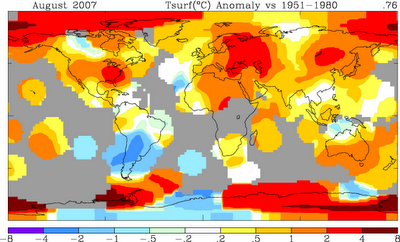
Let me know if you have improvement suggestions. Thanks in advance!

Cross-posted from Caveat Bettor.

Read the previous blog posts by Caveat Bettor:

  • The Democrat SC Showdown: Intrade v. Zogby
  • Zogby beats Intrade in predicting Nevada caucus winner Clinton.
  • The GOP SC and Dem NV Showdown: Intrade v. Zogby
  • Latest Intrade v. Zogby contest is up.
  • Who said prediction markets were perfect?
  • Intrade markets and Zogby polls agree in New Hampshire
  • The Iowa Showdown: Zogby v. Intrade

ADAM SIEGEL OF INKLING MARKETS VALIDATES CHRIS MASSES CONCEPT OF X GROUPS.

No Gravatar

All the reference material posted by Inkling in its marketplace area is awesome. High quality. Very interesting read. In the section highlighted below, Adam Siegel explains how important is the relationship between the blogs and the prediction markets. Which is what I said from day one. It&#8217-s time that the world recognizes me as the most forward thinker in the field of prediction markets. :-D

The explainer below on trader incentives is awesome, by the way. Go reading it, folks.

X Group Inkling

Inkling Free Pilot Program

No Gravatar

We try not to post directly about our platform or new clients on Midas Oracle, leaving it up to Chris to highlight the good&#8230- and the bad :) &#8230- but we thought people might be interested in a new capability we just launched this morning since it&#8217-s actually something everyone can try. You can now go to http://www.inklingmarkets.com and sign up for a free trial of a private, fully-featured marketplace. Just choose a name and URL for your marketplace, fill in your desired username and password, and you&#8217-re off and running. From day 1, when we launched Inkling, we have been big believers in allowing people to try before they buy, and this is the latest extension of that &#8211-hopefully making it even easier to try our platform beyond just being active on our public marketplace. This is something you can securely run inside your organization or publicly. We&#8217-ve also created a new help/reference section you&#8217-ll see as an administrator when you login to your marketplace. There are lots of lessons learned and best practices about managing a marketplace, providing appropriate incentives, creating effective markets, etc. Let us know if you have any questions/feedback or run in to any issues.

The Inkling explainers on prediction markets are absolutely awesome.

No Gravatar

It&#8217-s a fantastic set of practical explainers that Adam Siegel has built. It is well written, and these documents aggregate well many years of experience from the standpoint of a DIY betting exchange manager. It&#8217-s really good material, which I read many times this afternoon with great avidity.

&#8212-

To find the Inkling explainers:

– go to Inkling Markets

– click on &#8220-Run a free private prediction market pilot&#8220–

– fill in the form-

– go to your newly created prediction exchange (betting exchange)-

– on the right pane, go to &#8220-help / reference&#8221-.

&#8212-

Enterprise 3.0: new representations, new markets

No Gravatar

DiamondExchangeLater this week, NewsFutures will have another great opportunity to introduce prediction markets into the consciousness of mighty American businessmen and women.

At the invitation of the organizers of the September 2007 DiamondExchange event, I will take part in a panel discussion on &#8220-technologies to raise your organization&#8217-s IQ&#8221- led by Chunka Mui, author of Unleashing the Killer App. The exclusive event features an outstanding list of speakers including Marvin Zonis, professor emeritus of the University of Chicago, Dan Bricklin, inventor of VisiCalc, Cory Ondrejka, who leads the team developing Second Life, and Ray Kurtzweil, who needs no introduction a all.

The event, titled &#8220-Enterprise 3.0: new representations, new markets&#8221-, is organized by the high-powered consulting firm Diamond (Nasdaq: DTPI). It&#8217-s nice to see that, having preceded the &#8220-Web 2.0&#8243- bubble, prediction markets are already moving past it and being associated with the number 3&#8230-

The GreenbrierThe event will be held at the famous Greenbrier, in White Sulfur Springs, WV, whose tag line is &#8220-defining luxury since 1778&#8243-! Needless to say, I look forward to this fantastic opportunity to evangelize this particular crowd about the virtues of prediction markets.
&#8211-Emile (for NewsFutures)

[cross-posted from the NewsFutures blog]

US Online Gambling: Dont bet on it.

No Gravatar

One or two traders were caught out Friday, following a late afternoon surge in the share price of both Sportingbet and PartyGaming. Sportingbet shares were up 15.9% at 43 3/4p whilst PartyGaming climbed 9.5% to 26p.

Two factors may have been responsible for the rise- firstly, the fact that the tiny Caribbean resort may be about to use a World Trade Organization ruling to compel the United States to legalize online gaming- second, a rather spurious belief that the Interactive Media Entertainment &amp- Gaming Association might be successful in its lawsuit against the United States Department of Justice, in which the industry body requests a Temporary Restraining Order against the enforcement of the Unlawful Internet Gambling Enforcement Act.

The chances of either event forcing the US&#8217-s hand, any time soon, are slim- nonetheless these shares feed on rumour and it would be no surprise to see more speculative buying in the weeks ahead.

The Financial Times, meanwhile, has learned that the US proposal in response to the WTO ruling, involves opening opportunities in the storage, warehouse services and technical testing sectors to make up for the gaming restrictions. Gambling groups are believed to be pressing the European Union to reject the offer as inadequate.

Cross-posted from Betting Market by Niall O&#8217-Connor

The Bet2Give real-money betting exchange could facilitate the sponsoring of socially valuable prediction markets by foundations and think tanks.

No Gravatar

Could Emile Servan-Schreiber push his Bet2Give concept a bit further?

I&#8217-m thinking of something, having in mind the LongBets experiment. Bet2Give lets traders select the charity of their choice. Good. But can&#8217-t we go further than that? Why not letting some people (like Robin Hanson and his gullible fanboys like Chris Hibbert :-D ) create some long-term, socially valuable prediction markets, all this funded by foundations or think tanks&#8217- money (since the money will never leave the non-for-profit world, anyway). I mean, if AEI-Brookings funded the experiment, the subsidized traders could designate AEI-Brookings as the recipient of the trading winnings, right? So, the AEI-Brookings money would indeed be used for the trading, but, in the end, it would cost AEI-Brookings only some trading fees (5 cents for each dollar).

And, I&#8217-d like to see more interactions between blogs and prediction markets. In the scenario above, there would be a strong incentive to do just that from the part of all those crazy blogging experimental economists, don&#8217-t you think? Those hyper inflated egos will fire blog posts like crazy about their ongoing experiments at Bet2Give, and that would help the marketing of those experimental prediction markets.

Bet2Give is a too good idea to bet let it in the hands of Emile Servan-Schreiber. Does EJSS have what it takes to push the Bet2Give concept further? (EJSS is much smarter than most people in the field of prediction markets, but that&#8217-s not enough. He is not crazy enough.) I suggest that Bet2Give be declared of international social utility and be run by the Organization of the United Nations. :-D

Previous: Here’s how Bet2Give explains what a prediction market is to its prospects.

Prediction markets at the Money Tech conference

Money Tech conference = Technology and Money, Asset Management and Networks, Computing Horsepower and Trading + Prediction Markets

Robin Hanson will be presenting on prediction markets at the Money Tech conference. He is not yet on the official program, but our friend (and prediction market skeptic) Barry Ritholtz tells us that Robin Hanson was at the pre-conference dinner. (Robin Hanson was quite surprisingly &#8220-fascinating&#8221-, he wrote. :-D Will Robin Hanson manage to turn this skeptic into a fanboy? We&#8217-ll see.)

Psstt&#8230- Barry Ritholtz talks about November 2007 while the official site says February 2008. Bizarre.

Thanks to Alex Kirtland for alerting us about this Money Tech conference, last month.

UPDATE: Barry Ritholtz comments&#8230-

November? How did that happen?

I meant February.

My current excuse for any brain glitch like this is to declare that I smoked way too much pot in college and leave it at that. (That’s much better than admitting advanced senility/aging)

Read the previous blog posts by Chris. F. Masse:

  • Barack Obama’s victory in South Carolina won’t stop the Clintons.
  • eTech 2008 — Google’s enterprise prediction markets
  • Predictocracy = Market Mechanisms for Public and Private Decision Making
  • Prediction Market Management — Foresight Exchange vs. Inkling Markets & HubDub
  • Why you should launch your brand-new prediction exchange at a conference
  • Why Indian Software Outsourcing Companies are Outsourcing to China
  • Midas Oracle is the only popular, independent, exhaustive, multi-author, multi-exchange, Web-based resource on prediction markets.

A methodology flaw in the last UK Gambling Commissions survey report makes it useless for analysts and policy makers.

No Gravatar

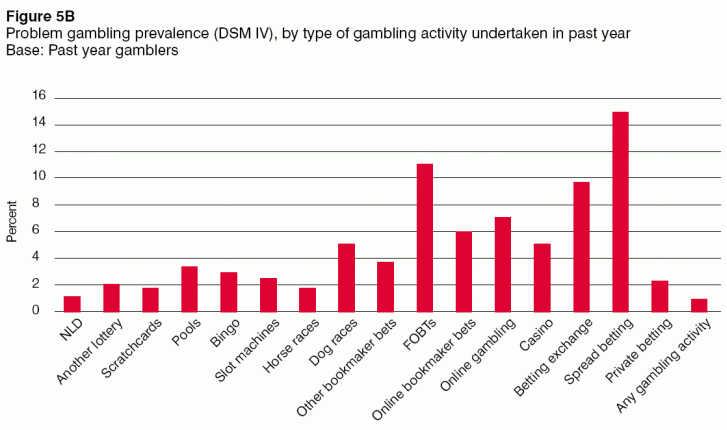
I have scanned and examined the UK Gambling Commission&#8217-s survey report on gambling and betting (PDF file), titled British Gambling Prevalence Survey 2007, and I have found out that there is a big problem in their list of gambling and betting activities. The problem is that survey respondents, who have been using a &#8217-spread-betting exchange&#8217-, were never been told specifically whether to select the &#8220-betting exchange&#8221- category or the &#8220-spread-betting&#8221- category. That should not be because there is big difference between a classic betting exchange (like BetFair, owned by The Sporting Exchange), which is regulated by the UK&#8217-s Gambling Commission, and a spread-betting exchange (like SpreadFair, owned by Cantor Fitzgerald), which is regulated by the U.K.&#8217-s Financial Services Authority (the equivalent of SEC + CFTC).

Indeed, spread bets (via a spread-betting bookmaker or via a spread-betting exchange) are high risk products, where the bettors/speculators need to deposit only a small percentage of the value of the bet. That is not the case with BetFair, which is a classic betting exchange. Here&#8217-s what is stated by BetFair:

Betfair do not offer credit facilities to our customers. Unlike some spread betting firms, we are not regulated by the Financial Services Authority in the UK. The reason that we do not offer credit is that the concept of the exchange relies on the fact that you must have the funds that you are staking in your account. When you place a bet, that money is secured by Betfair until the bet is settled and the funds paid out to the winner.

So the Gambling Commission survey report (cited like crazy by all the gregarious British media today) goes directly in my trash can. It&#8217-s a pity since we really need to know whether our beloved classic betting exchanges generate &#8220-problem gambling&#8221-. We can&#8217-t know that for sure reading this survey report, since they mixed up oranges and apples.

&#8212-

WHAT THEIR SURVEY FORM READ:

11. Betting exchange – (This is where you lay or back bets against other people using a betting exchange. There is no bookmaker to determine the odds. This is sometimes called &#8216-peer to peer&#8217- betting.)

15. Spread-betting – (In spread-betting, you bet that the outcome of an event will be higher or lower than the bookmaker&#8217-s prediction. The amount you win or lose depends on how right or wrong you are.)

&#8212-

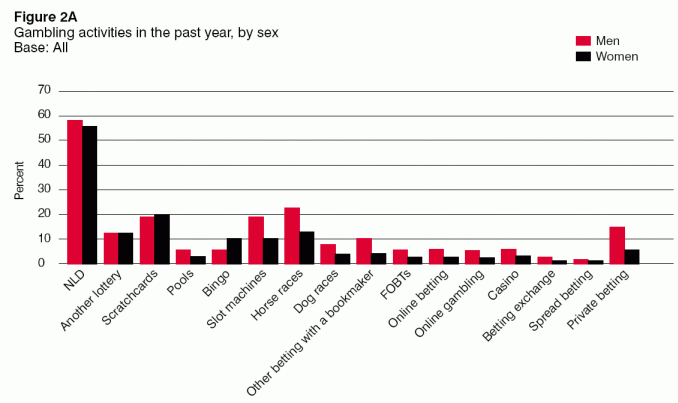
HERE ARE THE GENERAL FINDINGS OF THE SURVEY REPORT:

Gambliing UK 2007

Problem Gambling UK 2007

Enthusiasm and Arbitrage Opportunities at Media Predict

No Gravatar

Another play money arbitrage explanation, much easier than the last one.

I sat down to the computer this morning at exactly the time emails were arriving from Media Predict announcing the opening of five new markets for the &#8220-Project Publish&#8221- finalists. One of the five finalists will receive a book deal.

In the prediction markets, five new shares were launched at $50 ($ = Media Predict play money). Shares held in the winning book will be paid $100, the others will expire at $0. So, at market launch, selling one each of the five shares would gain $250, and guarantee a payoff of $-100. Result: riskless profit of $150. The market should have launched at $20 each (or, at least, that is one set of prices that would have eliminated the riskless arbitrage opportunity).

First to the new markets, I sold short what I could afford across the board, bringing all the prices down to $35. An hour or two later prices had drifted up on several shares, no doubt due to the enthusiasm some trader had developed for the books, but in their enthusiasm they didn’t realize that they should complement a purchase of one share with sales of other shares – otherwise they leave free arbitrage opportunities in the market. A bit later someone came along and sold all of the share prices down to $20 each.

Now, several hours later, prices have moved much higher on three of the books, while two seem to be drifting lower. I’ve sold some other Media Predict holdings so I could arbitrage some more, but I’m credit constrained in the Media Predict economy so I can’t grab all of the riskless profit. As I write, the current gain from selling a one-of-each suite of shares is $156, so the present riskless profit available is $56.

While the book shares are presented as five parallel markets, actually we have a single multi-outcome market. There are five books, and only one of the five will be selected. Since the sum of the probabilities across the five books is constant, if you think option A is more likely to win then it must be the case that the joint probability of B, C, D, and E is less likely. The market can take advantage of that relationship to improve market performance, for reasons that Chris Hibbert explains in “Increasing Liquidity in Multi-Outcome Claims.” If the market won’t do it, arbitrageurs can.

Note: Chris Masse was puzzled about bigger picture issues in his earlier post on Media Predict, and I comment on some of those issues in response. For the purposes of the post above I’m ignoring the big picture and just wondering about the market mechanism and implementation.