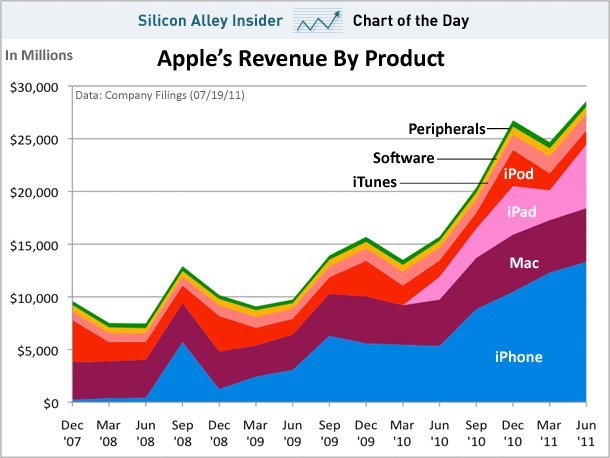
I am curious about what Paul Hewitt will think of this.
Meta
-
Recent Posts
- Native apps are reigning on mobiles, but Jakob Nielsen strategically bets on web apps. — [LINK]
- Steven Krivit continues to trash Andrea Rossi and his LENR technology. — [LINK]
- Interview with Adam Lashinsky — [VIDEO]
- Why some people are more innovative — [VIDEO]
- Forbes editor deciphers Steve Jobs’s Apple. — [VIDEO]
- Jason Ruspini rebuts Eric Zitzewitz on the regulation of political prediction markets. — [COMMENT]
- Eric Zitzewitz petitions the CFTC in favor of real-money prediction markets about politics. — [TEXT]
- Global warming is a big scam. — [LINK]
- A Swarm of Nano Quadrotors — [VIDEO]
- The Tragedy of the Commons — [VIDEO]
- Guy Kawasaki on Steve Jobs — [VIDEO]
- Inside Apple — [VIDEO]
- Mitt Romney’s taxes — [LINKS]
- A critique of Apple’s multimedia iBooks. — [LINK]
- Does Apple lack “generosity”? — [LINKS]
- Apple Education Push — [LINKS]
- Water Crystals — [DOCUMENT]
- Apple’s e-book software will allow publishers to make textbooks more interactive. — [LINKS + VIDEO]
- Alain Soral is France’s most dangerous intellectual… (dangerous for the French plutocrats, that is). — [VIDEO]
- Computers thru time — [CHART]
Okay, I’ll bite…
I’m curious why Andrew McAfee would cite this example in support of prediction markets. Though he mentions that his executive students had conducted a “simple poll”, in fact, they really created a pari-mutuel market, which provided the “risk and gain”. It was not a prediction market, as the executives believed it was. There was no buying and selling of shares. They simply purchased their “horses” (time slots). It might be more appropriate to call the entries “tickets” rather than “shares” and “bets” rather than “investments”.
The “consensus” ticket was correct. No surprise here (favourite), and the payoff was slightly higher than it should have been, because of the slight long shot bias. Andrew might have corrected them on their terminology, too. Prediction markets are not run to obtain a *consensus* of opinion. They are run to *aggregate* information from the market participants.
It really would have been interesting to sit in on the class, had the fellow arrived at one of the other time periods. Would the executives have cheered that their “prediction market” had worked like a charm? Surely, someone would have jumped up and said “but it’s well-calibrated!” Had the wrong “horse” won, would *any* of the executives have been confident enough to present a proposal on the use of prediction markets in their companies? I’ll bet all of them would have been a bit concerned that the front runner didn’t win.
Andrew writes that it showed the “power of incentives”. Actually, it did not, at least in the sense we usually define “incentives” in prediction markets. In a true PM, the incentive is presented when the market price is not “accurate”. The informed trader either knows this or has an incentive to obtain more information and set the price right. His incentive is the profit from trading to correct an inaccurate market price. There was no change in the price of any of the “shares” in the market they described. Hence, there was no “incentive” in this sense.
Andrew also states that this experiment shows how easy it is to set up “convincing demonstrations” of prediction markets. I agree, they are easy to set up (at least technically). Making them work is much, much more difficult.
I’ve read Andrew McAfee’s other posts on prediction markets, and it appears he’s been slipped a bit too much of the PM Kool-Aid that is going around. If you don’t read the prediction market research papers with a critical eye, you can get caught up in the over-enthusiastic reporting of results and come to the conclusion that prediction markets are a *proven* technology for greatly improving corporate forecasting problems. Nothing could be further from the truth at this point. Worse, there is not much useful research being published.
I think Andrew McAfee should have presented his students with a more balanced summary of the strengths and weaknesses of prediction markets.
That’s my take on it. However, I am happy that the executives were interested in prediction markets! There is some hope, yet.