Andrew Gelman to Robin Hanson: You want *simple* forecasting methods? We do them, too. As a matter of fact, we do *all* kinds of forecasting methods at Columbia —both the complicated ones and the simpler ones. Come to my class, buddy.

No Gravatar
andrew-gelman

Andrew Gelman

Mike:

July 16, 2009 at 2:54 pm

I suspect you two might be arguing about two different things.

I presume Robin admits that *some* people go to college to learn, they go to the “best” schools to increase the chances to interact with, and benefit from, the most creative researchers, and they use the knowledge they gained. The fraction will be greater when you consider graduate programs. Setting aside subconscious motives or why we have the motives we are conscious of, *most* academics do what they do with an honest belief that it is important — either because it increases their understanding, or the collective understanding of humanity, or has practical value, or because of indirect values related to providing “education” (which goes far beyond the facts and theories learned in the classroom).

I think Robin’s stance is these people play a small part in the system, which takes in millions of students every year, and which is financed to the tune of many many billions of dollars every year. So it’s interesting to ask, what are the motives of the majority — why do they do what they do?

Andrew Gelman:

July 16, 2009 at 9:01 pm

Robin:

First off, let me assure your readers that I am funded neither by the Heritage Foundation nor the state of New York. The quote that you pulled is not about “why I am funded” but rather a response to a remark you made in your earlier blog entry about what “foundations and governments want to promote the creation and spread of.”

Second, Mike’s summary makes sense to me. What puzzles me is why you seem reluctant to accept that the students who take my class, who pay thousands of dollars a year to attend Columbia, who specifically want to find out when I am teaching multilevel modeling and Bayesian statistics, are doing so because they want to learn the material.

Sure, maybe you’re right, maybe they don’t want to learn the stuff at all–but, as far as I’m concerned, the burden of proof is on you here. You yourself describe your ideas as “contrary to what people usually say and assume.” Maybe, just maybe, most of the people are right here.

To put it another way, you’re speculating and I’m speculating. You have a theory involving evolution and signaling, I have a theory that people pay tuition for a good reason. When it comes to motivations of students, funders, etc., both of us are offering argument and anecdote. When it comes to your experiences with GMU students who’ve taken your classes, your anecdotes are more relevant; when it comes to Columbia students taking my classes, I think my anecdotes are more relevant.

Finally, regarding the effectiveness of simple statistical models: that’s fine. If you take a look at my books, we have lots of simple statistical models. I spend a lot of time in class discussing these. The sorts of multilevel models that I fit are pretty simple too; they just vary by group, which makes them look complicated to people who aren’t used to them. So I’m not sure what you mean by “simpler methods.” Do you suggest that I only fit models where coefficients don’t vary by group? I do this all the time, moving to multilevel models when needed. Basically, I just about always try to do the simplest possible thing that will work. It just turns out that, in many cases, the simplest possible thing has problems. If you think that the article you linked to suggests that students shouldn’t be taking my class, I think you’re missing a lot.

Robin Hanson:

July 16, 2009 at 10:55 pm

Andrew, I’m not talking mainly about conscious motivations but about social functions; the pressures which shape institutions over the long run. I am trying to account well for all our data on academia as a whole, and not focused specifically on GMU or Columbia.

-

Robin Hanson’s un-answered question:

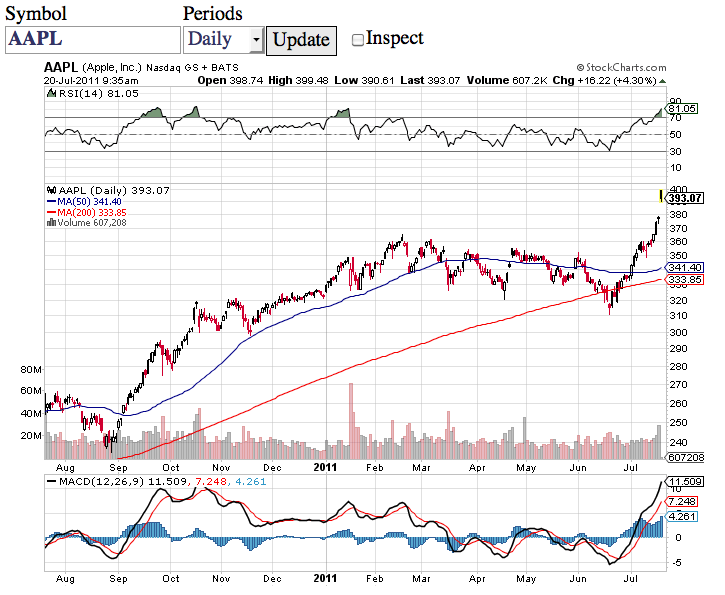
Last week I mentioned that fancy stat forecasts are consistently beat by simple moving averages; have you done field tests to see how well your students actually do using your methods, compared with simpler methods?

About Chris F. Masse

Founder and President of Midas Oracle
This entry was posted in Collective Forecasting, Forecasting (Science & Practice). Bookmark the permalink.

Leave a Reply