Prediction Markets + Market Predictions = Collective Forecasting That Pays Off

If prediction markets are so good at forecasting, why aren’t they being used much more widely?

No Gravatar

Jed Christiansen has an awesome industry analysis … which I will disagree with. :-D

giza-pyramid-of-cheops

Number one, I don’t understand why information aggregation would be a “bottom-up” approach (as opposed to “top-down”). Our traders bring bits of information to the market —but these bits of information were originally produced by the traditional sources (news, political polls, political forecasters, opinion leaders, etc.). I don’t understand why this “bottom-up” metaphor would apply to the prediction markets. Generally speaking, I hate metaphors. :-D

2001monkey

Number two, according to Jed, the slow adoption of enterprise prediction markets would be due to the “cognitive dissonance” that they provoke in the (weak) mind of the (freal) business managers. In other words, EPMs are such a novelty, and the corporate forecasters such a bunch of retarded people, that it will take decades before commercial organizations get to adopt the prediction market tool.

2001-spacesuit

The reality is different.

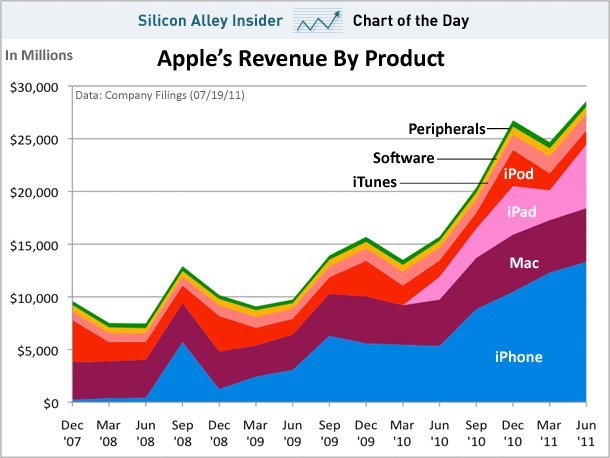
  1. As one can plainly see, the Americans love technology very much. For instance, it took less than 2 years for the iPod, the iPhone, FaceBook, or Twitter, to reach mass adoption. When a brand-new technology is truly awesome, the Americans are quick to acquire it. If enterprise prediction markets were such a revolutionary and powerful forecasting tool, it would have found a market already —just like the iPod, the iPhone, FaceBook or Twitter did.
  2. The benefits of enterprise prediction markets have been over-hyped by a bunch of Ivory Tower economic canaries who have no experience whatsoever in forecasting and business administration.
  3. The added accuracy of the enterprise prediction markets is marginal —and anyway does not fill the gap with omniscience (contrary to people’s expectations). The value of EPMs lays in some specific situations where the competitive forecasting tools have limitations. As of today, to the notable exception of Inkling Markets [deep respect to NewsFutures and CrowdCast, anyway], prediction market consultants have been beaming out generalities about markets that play well with some business media, instead of publishing case studies.
  4. The hurdles of running enterprise prediction markets have not been disclosed fully to the public. The main challenge is to find enough active traders. Remember than InTrade (who aims at the Americans) is powered by a few thousands of active traders, and BetFair (who aims at the British), by a few hundreds of thousands. Let’s remember that America is populated by 300 million people, and the United Kingdom, 60 million. In both countries, only a very small part of the population engages in event derivative trading — far less than 1%, and it is closer to 0% than to 1%, actually. In the context of a Fortune-500 company, which is of course much smaller than a country, the pool of potential active participants whose trading activity is sustained over time is quite tiny.
  5. The field of enterprise prediction markets does not need to turn every Ivory Tower economic canary into a “chief scientist”. What companies need are Chief Forecasting Officers, who will analyze, impartially, for each specific situation, which tool is appropriate —a traditional forecasting tool (most of the times), or the EPM solution (at times). This analysis should not be done by a prediction market afiscionados, who has a bias, but by a professional and scientific forecaster who can do a benefit/cost analysis of each tool for each specific situation. EPMs will take off when the consultants and managers cease to be mezmerized by the economic canaries and start getting down and dirty with business cases in each industry.

UPDATE: Jed’s reply

UPDATE: My reply

13 Comments to If prediction markets are so good at forecasting, why aren’t they being used much more widely?

  1. Medemi's Gravatar MedemiNo Gravatar
    April 2, 2009 at 7:17 PM | Permalink

    Very good analysis by Jed.
    -
    In order to make good predictions one needs both approaches, bottom-up as well as top-down. The top-down approach should speak for itself – that’s what anyone can witness in any corporation. What’s usually lacking is the bottom-up approach, which I may be able to illustrate by giving you an example outside (but close to) the PM field.
    -
    We had a conversation today, at work, coincidentally, informally, which involved 8 people with different expertise and different viewpoints. We had a designer, a technical analyst, a hardware guy, a developer, a tester, a web guy and then some. We were just trying to figure out the odds of bringing this IT project to a succesful end, which has been running over budget for 2 years now. It wasn’t hard for us to determine what the structural problems were (and had been) and how they could be solved. (In order to make a reliable prediction you have to have a clear understanding of the problems you are facing).
    -
    The result, one guy was optimistic, 6 neutral, 1 guy was pessimistic.
    -
    The problem is, this valuable information (from the experts in the field) and how the problems can be solved was not passed on the management. Why? Because they are not interested. The bottom-up approach is simply NON-EXISTENT.
    I was part of a special task-force once, three years ago, to identify problems early on. Identify the problems we did, but the management wasn’t pleased with the results and chose the path of least resistance. They believe what they want to believe, “Just do the best you can given the circumstances” were the instructions we got, when they should have taken clear-cut hard action to make sure those problems would never arise. 2 People left straight away as they were experienced enough to understand that this ship would only go one way – to the bottom.
    So here we are, three years later, still struggling…
    -
    It’s about power, deadlines, politics and then some nonsense that has nothing to do with bringing an IT project to a succesful end, on time. If management is not able/willing to listen to the experts in the field, then what chance does a flow of “questionable” and abstract information from a PM have? Where it could/would have great value – in huge and complex projects – ZERO.

  2. April 4, 2009 at 6:10 PM | Permalink

    Hi, Chris.

    I was about to reply, but realized that I wanted to make enough points that I should write another blog post instead! I’ve replied to both you and Medemi here:

    http://blog.mercury-rac.com/2009/04/04/follow-up-to-approaching-business-problems-differently/

  3. Medemi's Gravatar MedemiNo Gravatar
    April 5, 2009 at 8:42 AM | Permalink

    Jed,

    good point about senior management wanting to know if project managers are hiding the thruth from them.

  4. April 5, 2009 at 11:53 AM | Permalink

    Medemi,

    I was speaking to a senior bank manager a while back that was very keen on better understanding this; he figured that only one of his project managers was regularly telling him an unvarnished truth. Then it’s just a matter of trying to assess the value of knowing the truth earlier!

  5. Medemi's Gravatar MedemiNo Gravatar
    April 5, 2009 at 2:34 PM | Permalink

    Jed,

    I’m working on a project with close to 300 people, all IT. There must be 10 or so project managers. They have weekly meetings. When you kick off a massive operation like that nobody wants to be the one telling the others “we can’t do this, not this way”.
    One of my colleagues once attended such a meeting. He told me it’s a bloody competition of who can present the rosiest picture!

    I’m relatively satisfied with my project manager as he is open to suggestions, and when we push him hard enough he tends to listen to our side of the story. But then we completed our task in time. He used to hate these meetings for the same reason. I know of at least one other project manager who felt the same way, and there must have been more. Somehow (especially during the intial phase) it must be too hard for them (in that setting) to escape the social pressures that appear to be dominating the scene.

  6. Medemi's Gravatar MedemiNo Gravatar
    April 5, 2009 at 4:32 PM | Permalink

    Jed,

    without giving too much detail (people could be listening) the solution to our problem would (likely) be to install another €32M of hardware, or have one of out suppliers redesign the whole thing (their part). Just to give you an indication of how much money can be saved if you get it right the first time.

  7. Medemi's Gravatar MedemiNo Gravatar
    April 27, 2009 at 2:10 AM | Permalink

    Today there will be a meeting at the very highest level to decide whether our project will be terminated or not. Total cost so far : €130,000,000
    It will be a political decision, rather unfortunate…. again… so anything can happen.
    Hopefully we will hear the result tomorrow.

    Chris, I didn’t have trouble finding this thread because when I google my chatname this page hits the top with nothing else even close. What does it mean, does it have a lot of readers?

  8. Medemi's Gravatar MedemiNo Gravatar
    April 27, 2009 at 12:39 PM | Permalink

    Ok, thanks.
    I’m not going to post the result of this debacle because I believe it is irrelevant. The point has been made.

  9. Medemi's Gravatar MedemiNo Gravatar
    May 3, 2009 at 6:03 AM | Permalink

    Who would believe it, the result IS relevant.
    No decision was made because “there is not enough information available”. Quite ironic in the context of EPM’s. Nobody wants to lose his job over this so a third party will be hired to analyze the situation and create a verdict. Of course, they don’t know anything, and judgment day is many many weeks away.

    This thing (these people) are giving me a nervous breakdown and I’m looking for a VERY LONG holiday when this thing is over.

  10. Medemi's Gravatar MedemiNo Gravatar
    January 7, 2010 at 10:01 PM | Permalink

    Hello again. This thread still hits the top when I google my handle so I thought it would be interesting to give you a final update. Final it will be.
    -
    I quit that project voluntarily about 2 months ago. I’m in my 6-month sabbatical now. It’s amazing to me that I kept with it for another 6 months.
    -
    The project is still ongoing. It’s 2010 now. Money is still being wasted. The thinking is that eventually the validation test will fail, and maybe everyone will keep their job (and reputation intact). Who knows.
    -
    What do we learn from this? Each to their own, but it couldn’t hurt for the non-believers of EPM’s to reflect on this story a bit, and consider what a deadly combination politics, divided responsibility, personal motives and bureaucracy can be.

Leave a Reply

You must be logged in to post a comment.